How Does Lightning Occur? The Science Behind Nature’s Most Powerful Electrical Displays
# How Does Lightning Occur? The Science Behind Nature’s Most Powerful Electrical Displays
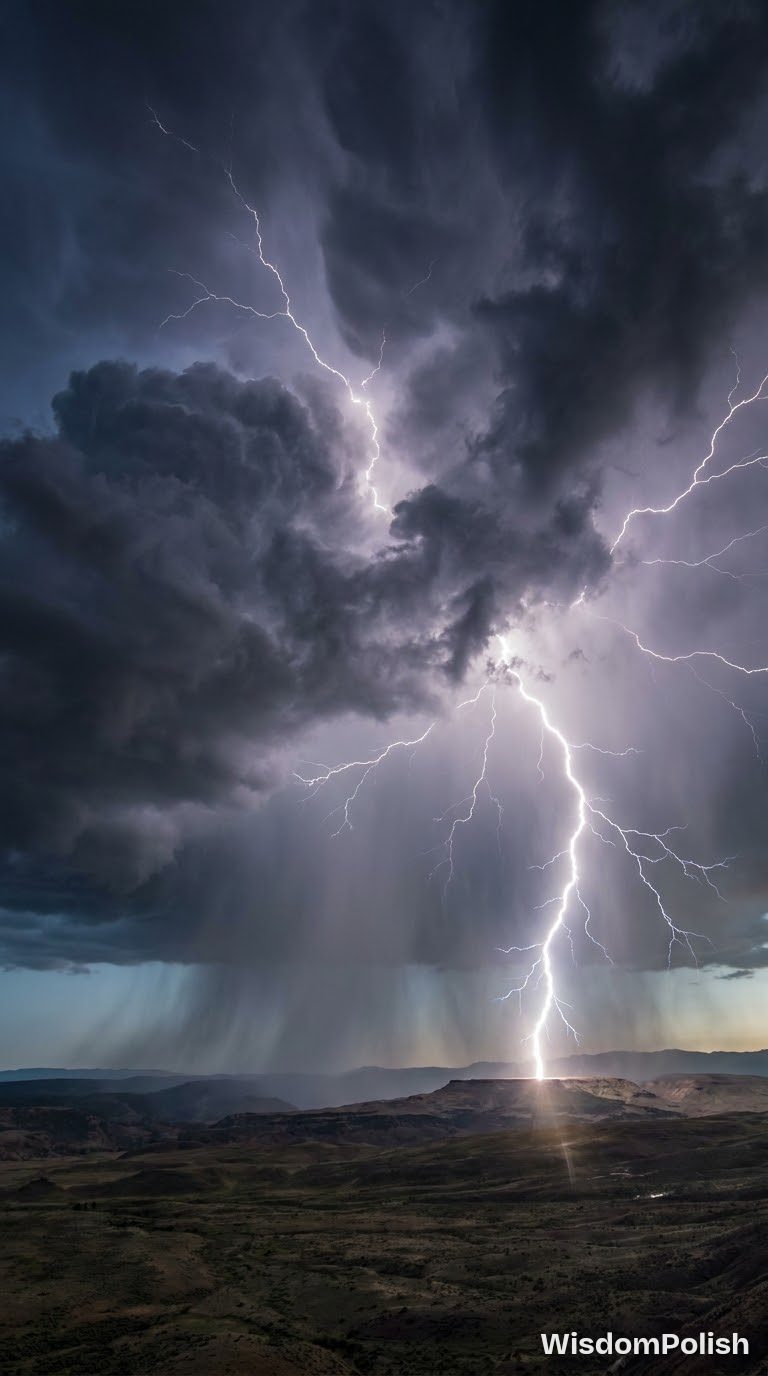
Lightning is one of the most powerful and fascinating natural phenomena on Earth. During a thunderstorm, a sudden flash can illuminate the entire sky, followed by the deep rumble of thunder. Although lightning lasts only a fraction of a second in many cases, it releases enormous amounts of energy and can cause serious damage.
But what actually causes lightning? Why does it appear during thunderstorms? Why does thunder follow a lightning flash, and how dangerous can lightning be to humans?
Understanding the science behind lightning reveals how electrical energy builds up in the atmosphere and is suddenly released.
## What Is Lightning?
Lightning is a natural electrical discharge that occurs when an imbalance of electrical charges becomes strong enough to produce a sudden flow of electricity through the air.
It commonly occurs during thunderstorms, when powerful air currents move water droplets, ice crystals, and hail particles inside large storm clouds.
Lightning can occur within a single cloud, between separate clouds, or between a cloud and the Earth's surface.
Although lightning is often associated with heavy rain, it can also occur during storms that produce little or no rainfall at ground level.
## How Does Lightning Form Inside Clouds?
The formation of lightning begins inside large thunderstorm clouds, particularly cumulonimbus clouds. These towering clouds can extend many kilometres into the atmosphere.
Inside these clouds, strong upward and downward air currents move water droplets, ice crystals, and small hailstones around at high speeds.
As these particles collide, electrical charges are transferred and separated. The exact processes are complex, but collisions involving ice particles play an important role in the development of electrical charge within many thunderstorms.
Generally, positive electrical charges become concentrated near the upper part of the cloud, while negative charges accumulate in the lower region.
This separation creates an increasingly strong electrical field.
When the electrical field becomes sufficiently intense, the conditions necessary for a lightning discharge may develop.
## Why Does Lightning Suddenly Flash?
Under normal conditions, air acts as an electrical insulator, meaning that it resists the flow of electricity.
However, when the electrical field becomes strong enough, the air can become electrically conductive along a developing path.
During a lightning discharge, electrical breakdown allows an intense current to flow through the air. The resulting energy produces the brilliant flash that we see as lightning.
In a cloud-to-ground lightning strike, a developing channel of electrical discharge can extend downward from the cloud. As it approaches the ground, an upward electrical connection may develop from the ground or an object on it.
When these channels connect, a powerful current flows through the established path.
The bright flash we observe is produced by the intense heating and illumination of the air along this electrical channel.
Not all lightning follows the same process, and many lightning flashes occur entirely within clouds without reaching the ground.
## What Are the Different Types of Lightning?
Lightning can occur in several forms, depending on where the electrical discharge takes place.
### 1. In-Cloud Lightning
In-cloud lightning occurs between regions of different electrical charge within the same cloud.
This is one of the most common forms of lightning. It can illuminate large portions of a thunderstorm cloud, sometimes making the entire cloud appear to glow.
### 2. Cloud-to-Cloud Lightning
Cloud-to-cloud lightning occurs when an electrical discharge travels between separate clouds.
These flashes can stretch across large sections of the sky, creating dramatic displays during powerful thunderstorms.
### 3. Cloud-to-Ground Lightning
Cloud-to-ground lightning occurs when an electrical discharge connects a thunderstorm cloud with the Earth's surface.
This type of lightning is particularly dangerous because it can strike people, trees, buildings, vehicles, and other objects.
### 4. Ground-to-Cloud Lightning
In certain circumstances, a lightning channel develops upward from a tall structure or another elevated object toward the electrically charged region above it.
This is known as upward lightning and can occur around tall buildings, towers, and wind turbines.
## Why Does Lightning Produce Thunder?
Lightning and thunder are two parts of the same natural event.
When lightning occurs, the electrical current heats the surrounding air extremely rapidly. The air along the lightning channel can reach temperatures of approximately 30,000 degrees Celsius under some conditions.
For comparison, the visible surface of the Sun has a temperature of approximately 5,500 degrees Celsius.
This sudden heating causes the air to expand rapidly, generating a pressure wave that travels outward through the atmosphere.
As this pressure wave travels, we hear it as thunder.
The sound may be a sharp crack, a loud boom, or a long rumble, depending on the distance, the shape and length of the lightning channel, and the surrounding atmospheric conditions.
A long lightning channel can produce thunder that seems to roll across the sky because sound from different sections of the channel reaches the listener at different times.
## Why Do We See Lightning Before Hearing Thunder?
Light travels much faster than sound.
Light travels at approximately 300,000 kilometres per second in a vacuum, while sound travels through air at roughly 343 metres per second under typical conditions near room temperature.
Because of this enormous difference in speed, the flash reaches our eyes before the sound reaches our ears.
The time between seeing lightning and hearing thunder can help estimate the distance to the lightning.
As a rough guide, a delay of approximately three seconds corresponds to a distance of about one kilometre.
For example, if thunder is heard six seconds after a flash, the lightning occurred approximately two kilometres away.
However, this calculation is only an estimate. You should never rely on it to decide whether it is safe to remain outdoors.
If you can hear thunder, lightning is close enough to pose a potential danger. Seek shelter immediately.
## How Powerful Is Lightning?
Lightning is extremely powerful, although its exact characteristics vary considerably from one strike to another.
A typical lightning flash can involve electrical currents of tens of thousands of amperes, and some strikes produce much higher peak currents.
The energy released can heat the surrounding air, damage buildings, ignite fires, destroy electrical equipment, and cause severe injuries.
Lightning can also affect electrical systems far from the actual strike location. Electrical surges may travel through power lines, communication cables, and other conductive pathways.
This is why lightning protection systems and appropriate electrical surge protection are important in areas frequently affected by thunderstorms.
## Can Lightning Strike Without Rain?
Yes. Lightning can occur even when rain is not falling at the location where a person is standing.
In some thunderstorms, rain evaporates before reaching the ground. In other situations, lightning travels away from the main area of rainfall.
This is why a storm that appears distant or seems unlikely to bring rain can still present a serious lightning hazard.
Lightning can strike several kilometres away from the main thunderstorm, sometimes beyond the area where rain is falling.
Therefore, clear skies directly overhead do not always mean that outdoor activities are safe.
## How Dangerous Is Lightning to Humans?
Lightning is a serious natural hazard that can cause burns, nerve damage, cardiac arrest, and other life-threatening injuries.
A person does not need to receive a direct strike to be injured.
Lightning-related injuries can occur through several mechanisms, including electrical current travelling through the ground, a discharge jumping from a nearby object, or electricity entering a building through wiring or plumbing.
People working in open fields, playing sports, hiking, swimming, or spending time near isolated trees can be particularly exposed during thunderstorms.
Although the risk of being struck varies by location and activity, lightning safety should never be ignored.
## How Can You Protect Yourself During a Thunderstorm?
Taking appropriate precautions can significantly reduce the risk of lightning-related injuries.
### Seek Proper Shelter
When thunderstorms approach, move inside a substantial, fully enclosed building or a fully enclosed vehicle with a solid metal roof and closed windows.
Open shelters, picnic shelters, and bus stops do not provide the same protection as an enclosed building.
### Stay Away From Isolated Trees
Standing under a lone tree during a thunderstorm is dangerous. Lightning can strike the tree and injure people nearby through electrical current travelling through the ground or jumping from the tree.
### Avoid Water and Open Areas
Leave swimming pools, beaches, lakes, rivers, and other bodies of water when thunderstorms approach.
Open fields and elevated locations can also expose people to lightning hazards.
### Avoid Conductive Systems Indoors
During an active thunderstorm, avoid using wired electrical equipment and contact with plumbing, including sinks, showers, and faucets.
Stay away from windows and doors when severe lightning is occurring nearby.
### Wait Until the Storm Has Passed
Remain in a safe shelter until at least 30 minutes after the last thunder is heard.
This precaution helps reduce the risk of being struck by lightning from a storm that has not completely moved away.
## Does Lightning Have Any Benefits for the Environment?
Although lightning can be destructive, it also plays a role in natural chemical processes.
Earth's atmosphere contains a large amount of nitrogen gas, but most plants cannot use atmospheric nitrogen directly.
The intense energy of lightning can cause nitrogen and oxygen in the atmosphere to react, producing nitrogen oxides. These compounds can eventually form nitrates that enter the soil through rainfall.
Plants can absorb these nitrates and use the nitrogen to support growth.
However, lightning is only one part of the natural nitrogen cycle. Biological processes, particularly those involving nitrogen-fixing microorganisms, are also essential for maintaining nitrogen availability in ecosystems.
## Interesting Facts About Lightning
Lightning is more than just a flash of light in the sky. Here are several fascinating facts about this natural phenomenon.
**Lightning can be hotter than the Sun's surface.**
The air along a lightning channel can reach approximately 30,000 degrees Celsius, considerably hotter than the Sun's visible surface.
**A lightning flash can contain multiple electrical discharges.**
Some flashes consist of several successive pulses of electrical current along the same channel, making a single lightning event appear to flicker.
**Lightning does not always travel from clouds to the ground.**
Many lightning flashes occur entirely within clouds, while others travel between clouds or develop upward from tall structures.
**Thunder is caused by rapidly expanding air.**
Thunder is not the sound of clouds colliding. It results from the rapid heating and expansion of air surrounding the lightning channel.
**Lightning can occur in different weather conditions.**
Although it is most commonly associated with thunderstorms, lightning can also occur in volcanic plumes and certain other electrically active atmospheric environments.
## Conclusion
Lightning is a remarkable natural phenomenon caused by the buildup and sudden discharge of electrical charges in the atmosphere.
Inside thunderstorm clouds, collisions between ice particles help separate electrical charges. When the electrical field becomes sufficiently strong, an electrical discharge can occur, producing the brilliant flash we see across the sky.
The rapid heating of the surrounding air creates the pressure waves we hear as thunder.
Although lightning contributes to natural atmospheric processes, it can also cause severe injuries, fires, and damage to buildings and electrical systems.
Understanding how lightning forms helps us appreciate the science behind thunderstorms and recognize the importance of taking precautions during severe weather.
The next time you see lightning illuminating the sky, remember that this spectacular display is the result of powerful electrical processes taking place in Earth's atmosphere. Most importantly, observe thunderstorms from a safe location and seek proper shelter whenever thunder is heard.
Comments
No comments yet. Be the first.
Leave a comment
Comments appear after they are approved.