Why Do Elephants Only Survive in Africa and Asia? The Fascinating Evolution of Giants
# Why Do Elephants Only Survive in Africa and Asia? The Fascinating Evolution of Giants
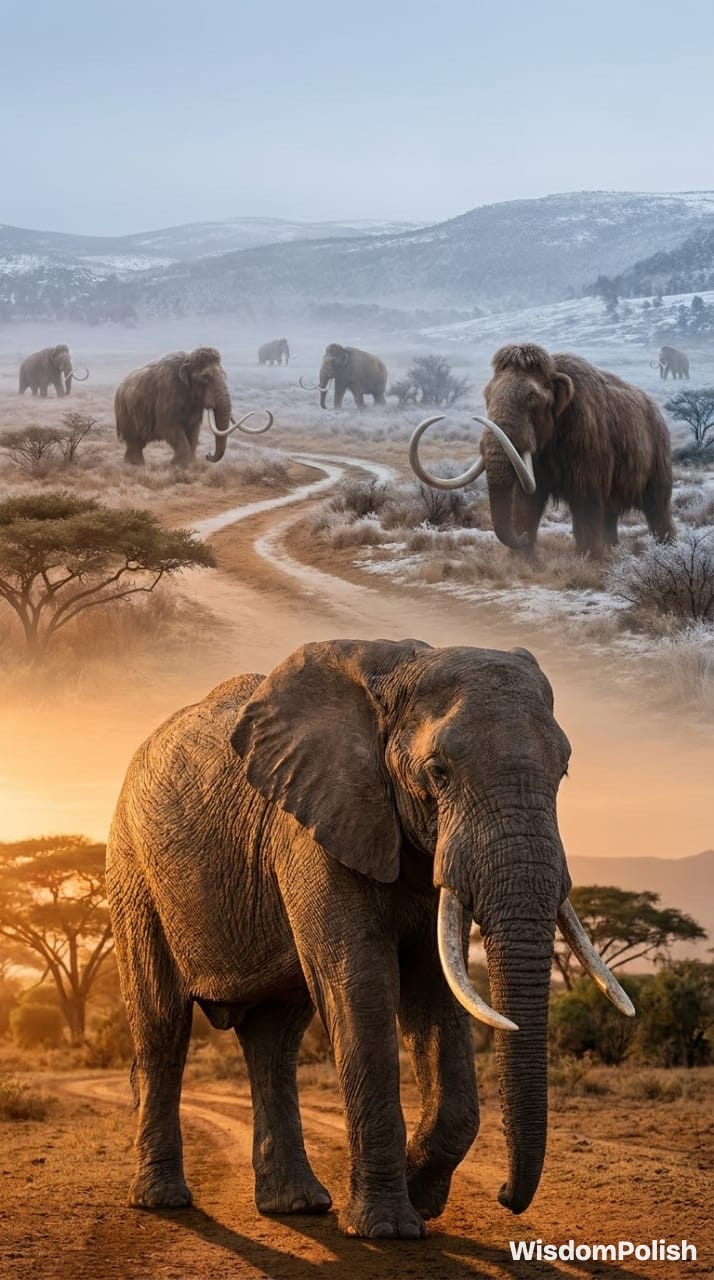
Elephants are among the most remarkable animals on Earth. Today, wild elephants survive naturally in Africa and Asia, but their ancient relatives once roamed across Europe and the Americas. So, what happened to these magnificent giants, and why did they disappear from much of the world? The answer lies in millions of years of evolution, changing climates, and the growing influence of humans.
## The Ancient Origins of Elephants
The evolutionary history of elephants stretches back millions of years. Their early ancestors emerged in Africa, where primitive members of the group known as Proboscidea gradually evolved into a wide variety of trunked mammals.
Although modern elephants are the only surviving members of their broader evolutionary lineage, their ancient relatives were remarkably diverse. Some looked very different from the elephants we recognize today, varying in body size, tusk shape, and other physical characteristics.
Over time, changes in geography allowed these animals to spread beyond Africa.
When Africa became connected to Eurasia through changing geological conditions, ancient proboscideans gained opportunities to migrate into new territories. They spread across parts of Asia and eventually reached Europe and North America.
One important migration route was the Bering land bridge, which connected northeastern Asia with northwestern North America during periods when sea levels were lower.
This expansion allowed ancient elephant relatives to occupy a wide range of environments, from warm grasslands to cold northern regions.
## Mammoths and Mastodons: The Lost Giants
When people think of extinct elephants, the woolly mammoth is often the first animal that comes to mind. However, mammoths were only one part of a much larger group of prehistoric relatives.
Mammoths belonged to the genus Mammuthus. Different species lived across parts of Africa, Eurasia, and North America at various points in their evolutionary history. Woolly mammoths became particularly well adapted to cold environments, developing thick coats of fur and other characteristics that helped them survive harsh Ice Age conditions.
Not all mammoths were woolly. Some species lived in relatively warmer environments, while others evolved into smaller forms on islands.
Mastodons, on the other hand, belonged to the genus Mammut. They were distinct from mammoths and belonged to an earlier-diverging branch of the proboscidean family tree. Mastodons lived mainly in North America, where they inhabited forests and other wooded environments.
Although mammoths and mastodons resembled modern elephants in some ways, they represented different evolutionary branches.
Their existence demonstrates that elephant relatives once occupied habitats and continents where no wild elephants survive today.
## How Climate Change Contributed to Their Extinction
One of the most important factors in the disappearance of mammoths, mastodons, and other large prehistoric mammals was environmental change.
During the Pleistocene Epoch, commonly known as the Ice Age, the Earth's climate experienced repeated periods of cooling and warming. Vast areas of the northern hemisphere were covered by ice during colder periods, while warmer intervals transformed landscapes and ecosystems.
As the climate warmed toward the end of the last Ice Age, many habitats changed dramatically.
Grasslands shifted, forests expanded in some regions, and the availability of suitable food changed. Animals adapted to particular environments increasingly faced challenges as their habitats changed.
For some mammoth populations, these changes reduced access to the vegetation and open landscapes they depended on.
However, climate change was not the only factor.
## How Humans Contributed to the Disappearance of Prehistoric Giants
Early humans spread into many of the same regions inhabited by mammoths and other large mammals.
Archaeological evidence shows that humans hunted mammoths and used their remains for food, tools, and other purposes. Hunting may have placed additional pressure on animal populations already struggling with environmental changes.
Large mammals are particularly vulnerable when they reproduce slowly and produce relatively few offspring. If deaths exceed births for an extended period, their populations can decline significantly.
Scientists continue to investigate the relative importance of climate change, hunting, and other environmental pressures in the extinction of different prehistoric species.
The disappearance of these animals probably resulted from a combination of factors rather than one universal cause.
Mammoths survived in some isolated locations long after many mainland populations disappeared. The last known populations on Wrangel Island in the Arctic are generally dated to approximately 4,000 years ago.
Their survival on an isolated island illustrates how small populations could persist after their relatives had vanished elsewhere.
## Why Are African and Asian Elephants Still Alive?
Unlike mammoths and mastodons, the ancestors of modern African and Asian elephants survived the environmental changes that eliminated many other proboscideans.
Modern elephants belong to two living genera: Loxodonta and Elephas.
The genus Loxodonta includes two living species:
- African savanna elephant (Loxodonta africana) - African forest elephant (Loxodonta cyclotis)
The genus Elephas includes the Asian elephant (Elephas maximus).
These elephants evolved over millions of years and adapted to different habitats.
African savanna elephants live in a variety of open environments, including grasslands and savannas. African forest elephants inhabit the tropical forests of Central and West Africa.
Asian elephants are found in parts of South and Southeast Asia, occupying habitats that include forests, grasslands, and mixed landscapes.
Their survival does not mean these species were immune to environmental change. Instead, their evolutionary histories, ecological flexibility, and access to suitable habitats helped their lineages persist.
Today, however, modern elephants face serious threats from habitat loss, poaching, and conflict with humans.
## African Elephants vs. Asian Elephants: What Is the Difference?
African and Asian elephants share many characteristics, but several physical features distinguish them.
### 1. Ear Size
African elephants generally have much larger ears than Asian elephants. Their ears help release body heat, an important adaptation in warm environments.
### 2. Body Size
African savanna elephants are generally larger than Asian elephants. African forest elephants are smaller than their savanna relatives.
### 3. Head Shape
Asian elephants typically have two prominent domes on the top of the head. African elephants generally have a more rounded head profile.
### 4. Tusks
Both male and female African savanna elephants can develop tusks, although tusk size varies and some individuals lack visible tusks.
In Asian elephants, prominent tusks are primarily associated with males. Some males have small tusks or none visible externally, while females generally have small tushes or no visible tusks.
### 5. Habitat
African elephants occupy savannas, forests, and other habitats across parts of Africa. Asian elephants are associated with forests, grasslands, and other suitable habitats throughout parts of Asia.
These differences reflect the separate evolutionary histories of the two living genera.
## How Many Elephant Species Exist Today?
Three elephant species are currently recognized.
### African Savanna Elephant Scientific name: Loxodonta africana Main geographical range: Sub-Saharan Africa.
### African Forest Elephant Scientific name: Loxodonta cyclotis Main geographical range: Central and West African forests.
### Asian Elephant Scientific name: Elephas maximus Main geographical range: South and Southeast Asia.
Although all three species belong to the same broader evolutionary group, they have developed different characteristics in response to their environments.
Asian elephants also include several recognized subspecies associated with different geographical regions.
These include the Sri Lankan elephant, Indian elephant, Sumatran elephant, and Bornean elephant, although taxonomic classifications and the status of some populations may be revised as new genetic evidence emerges.
## Sri Lanka's Unique Connection to Asian Elephants
Sri Lanka holds a special place in the history and conservation of Asian elephants.
The Sri Lankan elephant, scientifically known as Elephas maximus maximus, is a recognized subspecies of the Asian elephant. These elephants are found in several parts of the island, particularly in the dry zone.
Sri Lanka's forests, grasslands, and seasonal water sources provide important habitats for wild elephant populations.
One of the best-known wildlife spectacles is the gathering of elephants around Minneriya and Kaudulla during periods when water and grass are available. These seasonal gatherings attract wildlife enthusiasts and photographers from around the world.
However, Sri Lankan elephants face increasing challenges.
Habitat fragmentation, the expansion of human settlements, agricultural activities, and competition over land contribute to human-elephant conflict.
Both people and elephants can suffer serious consequences when their habitats overlap.
Protecting wildlife corridors, maintaining suitable habitats, and developing effective coexistence strategies are important steps toward ensuring that elephants continue to survive in Sri Lanka.
## Are Elephants in Danger of Disappearing Again?
Although elephants survived millions of years of environmental change, their future is far from secure.
The International Union for Conservation of Nature classifies African savanna elephants as Endangered, African forest elephants as Critically Endangered, and Asian elephants as Endangered.
The major threats include:
- Habitat destruction and fragmentation. - Illegal killing and ivory trafficking. - Human-elephant conflict. - Loss of access to food and water. - Infrastructure development that blocks migration routes.
Because elephants need large areas of habitat and reproduce relatively slowly, their populations can take a long time to recover from significant losses.
Conservation efforts must therefore focus not only on protecting individual elephants but also on preserving the ecosystems and migration routes they depend on.
## Conclusion: A Story of Evolution, Survival, and Extinction
The story of elephants is much more than the history of a single animal. It is a story of evolution, migration, environmental change, and survival.
Millions of years ago, ancient relatives of elephants spread across continents and evolved into a remarkable diversity of species. Mammoths and mastodons once inhabited regions that are now without wild elephants, but changing climates, habitat transformations, and human activities contributed to the disappearance of many of these prehistoric giants.
Today, only three elephant species remain, living naturally in Africa and Asia.
Their survival is a reminder of how dramatically life on Earth can change over geological time. It is also a warning that even the largest land animals are vulnerable when their habitats disappear and human pressures increase.
Protecting the elephants that remain is essential if future generations are to witness these extraordinary animals in the wild.
Comments
No comments yet. Be the first.
Leave a comment
Comments appear after they are approved.