Why You Forget What You Read (and How to Remember It)
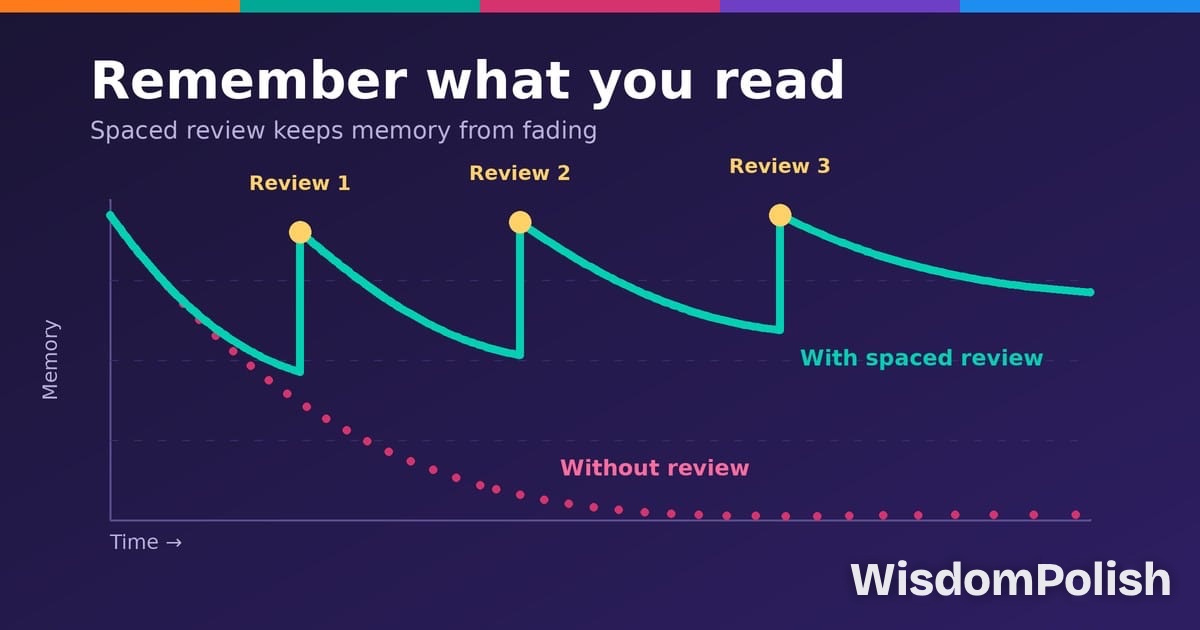
You finish a great book or article, feel smarter, and a week later you can barely remember a thing. This is normal. Forgetting is how the brain works, and it has little to do with how intelligent you are. The good news is that a few simple habits can change it.
Why we forget The brain keeps what it finds useful and lets the rest fade. When you only read or listen, nothing tells your brain that this information matters. A day or two later, most of it is gone. Researchers have described this pattern for well over a century, and it is called the forgetting curve.
Try to recall, not just re-read Re-reading feels productive because the words look familiar. But familiarity is not memory. A far better method is to close the book and ask yourself, "What were the main ideas?" Write them down from memory. The effort of pulling information out of your head is what makes it stay.
Space your learning Learning something once for three hours is less effective than learning it for thirty minutes on six different days. Review the material the next day, then a few days later, then a week later. Each review is short, and each one slows the forgetting.
Explain it in plain words Pick an idea you have just learned and explain it as if you were talking to a friend who knows nothing about it. If you get stuck or reach for complicated words, you have found the part you do not yet understand. Go back, fix that part, and explain it again.
Learn less, but use it Reading ten books without applying anything teaches less than reading one book and using its ideas. After each chapter, write three sentences about what matters and one thing you will do with it.
A simple routine to start today Read for twenty minutes. Close the book and write down what you remember. Check what you missed. Review your notes tomorrow, and again at the end of the week.
Knowledge is not what you have read. It is what you can remember, explain and use. Small, steady habits will take you much further than long, tiring study sessions.
Comments
No comments yet. Be the first.
Leave a comment
Comments appear after they are approved.